- Adult-Onset Still’s Disease (AOSD)
- Arthritis
- Ankylosing Spondylitis
- Bronchiectasis
- Chronic Obstructive Pulmonary Disease
- Chronic Skin Conditions
- Cluster Headache
- Complex Regional Pain Syndrome
- Eczema
- Ehlers Danlos Syndrome
- Endometriosis
- Fibromyalgia
- Gout
- Headaches
- HIV
- Long Covid
- Lower Back Pain
- Lupus
- Mast Cell Activation Syndrome (MCAS)
- Migraines
- Mixed Connective Tissue Disease
- Myalgic Encephalomyelitis

Medical cannabis treatments for Huntington’s disease
Huntington’s disease (HD) is a genetic neurological condition that leads to changes in the way someone moves and behaves. It’s caused by a hereditary gene mutation that causes neurons in the brain, particularly those associated with movement control, to degrade and die.
There is no cure for Huntington’s disease, and if someone carries the gene, they will eventually display symptoms. These usually begin with chorea, which means involuntary movements that usually become more exaggerated as the disease progresses. Twitches of the face, fingers, feet, and torso are common and may be worsened with stress.
Other symptoms include emotional or behavioural problems, anxiety, depression, sleeplessness, and pain. Patients will often lose weight at an accelerated rate due to the uncontrollable movements they make.
Medical cannabis for Huntington's disease may help with the management of common HD symptoms, including pain, spasms, and sleeplessness.
3 to 7
in 100,000 people may develop Huntington’s disease at some point in their lives.
90%
of Huntington’s disease patients experience involuntary movements called chorea alongside other symptoms such as anxiety, pain, and sleeplessness.
72%
of the 1,669 respondents to the largest survey of active UK medical cannabis patients ever conducted were prescribed the medication to support more than one symptom or condition.
75-80%
of 158 respondents prescribed medical cannabis for the symptoms of neurological conditions were “very” or “extremely” satisfied with the efficacy of their treatment.
Symptoms
Anxiety/Depression
Chorea and other involuntary movements
Cognitive decline, including memory loss and impaired executive function
Difficulty with voluntary movement, coordination, and balance
Dysphagia (difficulty swallowing)
Fatigue
Irritability and personality changes
Pain from muscle tension and chorea
Psychotic symptoms in some patients
Sleep disruption
Speech difficulties
Unintentional weight loss caused by the caloric demand of chorea
If you’re experiencing any of these symptoms, it’s important to seek tailored advice from a medical professional.
Treatment options:
Standard Huntington’s disease treatments patients may have tried:
Nutritional support and dietitian input
Occupational therapy
PEG feeding in late stages
Physiotherapy
Prescribed medical cannabis treatment
Quetiapine, olanzapine, and other antipsychotics for psychiatric symptoms
Sleep medications
Speech and language therapy
SSRIs and SNRIs for depression and anxiety
Tetrabenazine or deutetrabenazine for chorea
Join our growing community of over 240,000 people
Whether you’re new to cannabis-based medicines, switching from another medical cannabis clinic, or self-medicating, we’ll put you back in control of your health.
A word from our specialist
“What makes Huntington's disease so challenging is rarely just one symptom.
The progressive nature of the condition strips away control over movement, cognition and mood over time, which can lead to a highly unpredictable array of symptoms.
Families and caregivers feel this as much as patients do. So much of my role is helping people prepare for what's ahead, offering steady support and treatment approaches to help make each stage of the condition more manageable.”

Dr Oladotun Abidakun
Neurologist
Articles on Huntington’s disease
Can medical cannabis treatments help the symptoms of Huntington’s disease?
There is currently no known cure for Huntington’s disease, but for patient's struggling to find symptom control through conventional means, medical cannabis may be able to provide some support. Alternative treatments for Huntington’s disease may include medical cannabis, in formats such as oils, capsules, medical cannabis strains (vaporiser), pastilles, and THC vapes.
Huntington’s disease is a rare, degenerative, neurological condition that’s inherited from your parents. In cases where a parent carries the Huntington’s gene, a child has a 50% chance of inheriting that gene. A mutation in a gene causes neurons (nerve cells) in the brain to degenerate and die, leading to a range of physical, behavioural, and emotional symptoms.
Who does Huntington's disease most commonly affect in the UK?
Huntington’s disease symptoms usually start to appear between the ages of 30 and 50, and can affect anyone, regardless of gender. Some people may experience symptoms before the age of 20, but this is referred to as juvenile HD. If one of your parents was diagnosed with Huntington’s disease, you may be classed as “at risk” and can request a genetic test to find out if you also carry the same “faulty” gene. Everyone who carries Huntington’s will develop symptoms at some point.
Because symptoms can develop late, it’s unclear exactly how many people in the UK are living with Huntington’s disease. A 2026 Huntington’s disease epidemiology forecast suggests that between 3 and 7 people in 100,000 may carry the relevant gene, and that these numbers are rising.
What symptoms does Huntington's disease cause?
Huntington’s disease is strongly associated with chorea; jerky, strange motions that are completely out of the patient’s control. Sometimes the movements are described as dance-like, as they can seem fluid and intentional, but they are always involuntary. Movements may start off small, with tiny tremors or shaking hands, and will often become more pronounced as the person ages.
Other symptoms include changes in mood, including anxiety and depression. The degenerative nature of the condition can directly cause depression and other mood shifts, due to changes in the brain. However, patients may also experience anxiety and low mood due to the unpredictable nature of the condition and the awareness that they’re dealing with an incurable condition.
Here is a short guide to how the most common HD symptoms can affect a person’s quality of life:
Huntington’s disease symptom | How symptom presents | Potential impact on quality of life |
Chorea | Involuntary jerks, twitches, or dance-like movements | Pain and fatigue from constant motion; anxiety caused by unpredictable nature of movements; social isolation caused by fear of jerking or shaking in public |
Emotional changes | Mood swings, personality changes | Stress and anxiety caused by intense emotions can lead to isolation and impact the ability to perform daily tasks |
Depression | Persistent low mood, lack of motivation, feelings of hopelessness | Inability to work or perform daily tasks if depression is intense; isolation |
Sleep disorders | Insomnia, fatigue, restless nights due to involuntary movements | Persistent tiredness, inability to perform daily tasks, anxiety, depression |
Can medical cannabis treatment help with my Huntington's disease symptoms?
Medical cannabis for Huntington's disease may be suggested by a clinician for the relief of:
Anxiety
Depression
Pain occurs when muscles tighten due to continued involuntary movements. Some people experience akinesia, which is stiffness and rigidity in the muscles, which may become painful. Finding appropriate pain management and support for associated symptoms like sleeplessness can be key aspects of maintaining a good quality of life.
How does the endocannabinoid system relate to Huntington's disease?
The endocannabinoid system (ECS) is a network of cannabinoid receptors that impacts most aspects of health and well-being, including mood, movement, and sleep. The body produces its own cannabinoids (endocannabinoids), which interact with receptors and promote a state of internal balance known as homeostasis. THC/CBD for Huntington’s disease may support the ECS by providing potentially therapeutic compounds that act in a very similar way to endocannabinoids.
A 2022 article in Frontiers in Computational Neuroscience states that HD is directly linked to “Dysregulated endocannabinoid (eCB) signaling and the loss of cannabinoid receptors…” with this dysregulation possibly linked to the onset of depression often associated with HD. It’s possible, therefore, that medications offering a therapeutic effect on the endocannabinoid system could help mitigate some symptoms, but the article stresses that the exact connection between cannabinoid receptors and HD symptoms is unknown.
What does the research say about cannabis and Huntington's disease?
It’s important to note that there’s no evidence supporting the application of medical cannabis for neurodegenerative disease progression management. In other words, medical cannabis may offer supportive relief for symptoms, but it won’t slow the progression of HD. The condition is degenerative, and all medications and therapies currently offered are treatments, not cures.
What’s clearer is the research into symptom management. Where HD patients struggle with anxiety, for example, various studies support the prescription of medical cannabis as a potential therapeutic treatment. A systematic review of relevant studies published in Psychiatry Research in 2025 concluded that 70% of studies report positive improvements in generalised anxiety and social anxiety where CBD or THC was administered.
Medical cannabis for HD chorea could also offer some relief. A 2026 article in the Journal of Pharmacology and Experimental Therapeutics states that patients experiencing muscle spasms or spasticity, such as the involuntary movements that characterise chorea, saw improvements in symptoms when taking cannabis-based supplements. The primary areas that saw improvement were sleep, pain management, and fatigue.
What forms of Releaf medical cannabis can be prescribed for Huntington's disease?
A Releaf clinician may prescribe medical cannabis for Huntington’s disease in the following formats:
Medical cannabis strains (for a vaporiser)
Pastilles
Capsules
Oils
The formats offered will be based on your own preferences and lifestyle. Your clinician will also take into account any symptoms that may make some formats unsuitable, such as trouble swallowing.
Many patient stories highlight the potential benefits of medical cannabis for managing symptoms like sleeplessness. One Releaf patient, Darren, said:
“My medical cannabis treatment with Releaf has given me the ability to get the amount of sleep I need to really make the most of every single day.”
Am I eligible for UK medical cannabis treatment for Huntington's disease?
There is a range of conditions medical cannabis can be prescribed for, including many symptoms linked to HD. It takes around 30 seconds to find out if you could be eligible for medical cannabis for Huntington’s disease, using Releaf’s online checker.
Releaf has a world-class clinical team with 50+ specialists. When you book a consultation, you get the peace of mind that you’re speaking with a doctor who understands the challenges of HD.
Before you book your consultation, though, you may want to know how Releaf pricing works. Pricing is transparent and simple:
| Releaf Pay As You Go | |
Initial consultation fee | £99 | £99 |
Prescription charges | £19.99 per prescription, plus £4.99 delivery fee and any relevant medication charges | Free prescription charges, free delivery, and reduced medication charges |
Follow-up consultation fee | £69.99 | Included |
Additional benefits | Unlimited patient support; online resources including articles and education on medical cannabis, e.g., understanding differences between indica vs sativa strains of plants. | The same patient support and resources plus access to the Releaf+ rewards programme and Releaf Protect, which offers free legal advice on any aspect of medical cannabis. |
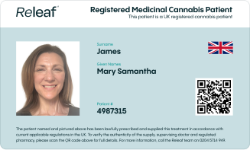
You’ll also receive a UK medical cannabis card free of charge once the first prescription is paid for. This card is delivered separately from your medication and may take 3-5 days to arrive. A medical cannabis card can’t guarantee you won’t be questioned by the police, but it offers a way to quickly identify yourself as a legal medical cannabis patient. If you plan to travel overseas, Releaf can also offer advice on when you should apply for travel certificates.
Releaf is the most trusted UK medical cannabis clinic, with a 240,000+ strong community. Find out if you’re eligible for medical cannabis for Huntington’s disease using the medical cannabis eligibility checker or contact our team.
FAQs on medical cannabis for Huntington's disease
How does medical cannabis interact with antipsychotic and chorea medications in Huntington's disease?
It depends on what type of medications you’re taking. When you have your consultation with a Releaf clinician, they’ll take into account any medications and potential interactions prior to deciding whether medical cannabis is suitable.
Can medical cannabis slow the progression of Huntington's disease?
There is currently no clinical evidence to suggest that prescribing CBD/THC for Huntington’s disease would slow the progression of this degenerative condition. Some patients may find medical cannabis supportive for symptoms like sleeplessness, pain, and anxiety.
I have experienced psychotic symptoms alongside my Huntington's disease. Can I still be considered for medical cannabis?
Some research indicates that cannabis is associated with a slightly elevated risk of psychosis: a 2025 article in the Journal of Psychiatry Reform, for example, stated that the occurrence of psychosis in people taking cannabis is estimated at 0.47%. Your clinician will discuss your current symptoms and treatment plan to ensure medical cannabis is right for you.
Can medical cannabis help with HD-related anxiety and depression?
Medical cannabis is regularly prescribed for a range of mental health disorders, including anxiety and depression. The Releaf patient survey showed that 31% of respondents were taking medical cannabis for mental health disorders, sometimes alongside other chronic conditions.
Which medical cannabis formats tend to work best for Huntington's disease symptoms?
Medical cannabis for Huntington’s disease comes in a range of formats, and your clinician will help you choose one that suits your preferences and lifestyle. The format may also support your current symptoms. For example, if you have trouble swallowing, it’s unlikely that capsules will be recommended, but oils may be ideal.